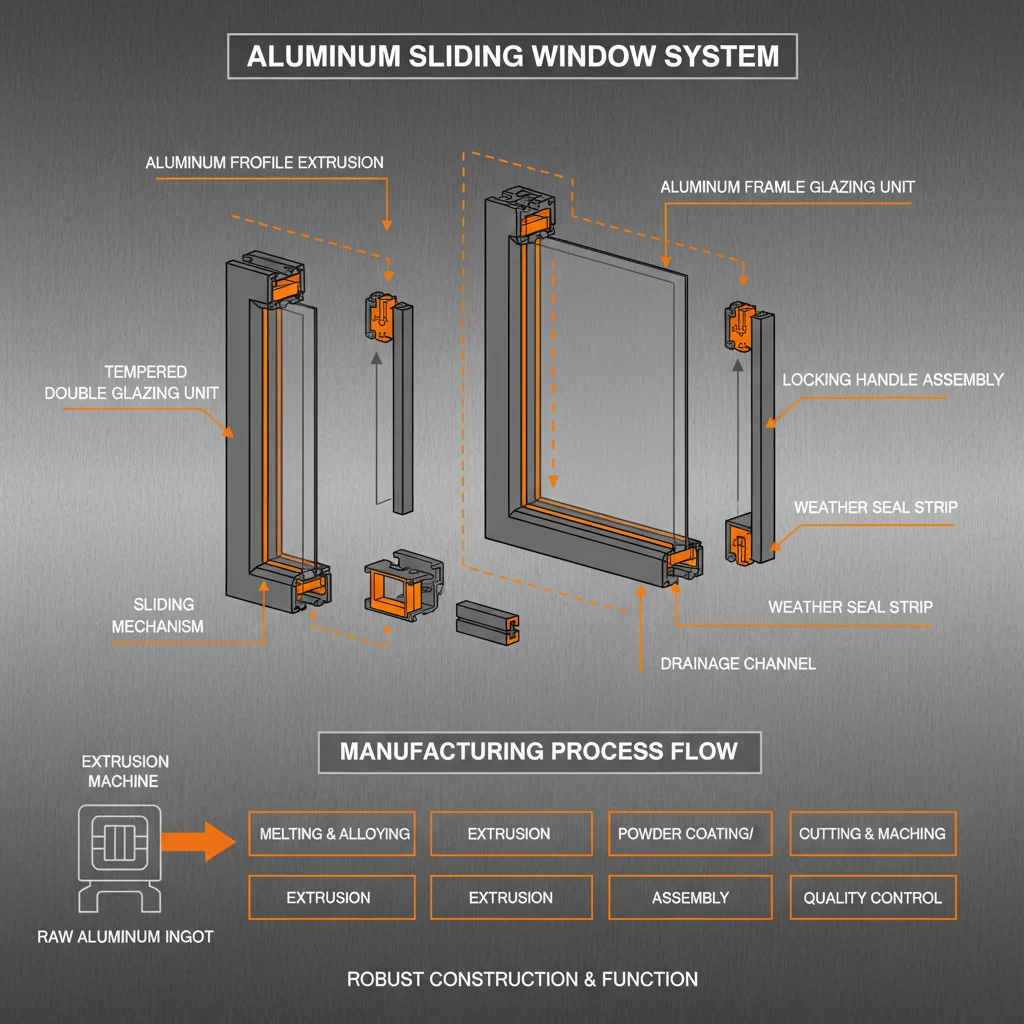
Securing a reliable supply chain for high-performance fenestration starts with identifying a Wholesale Aluminum Sliding Window Manufacturer that balances structural integrity with aesthetic minimalism. For B2B buyers, developers, and architects, the challenge lies in sourcing systems that mitigate thermal transfer and noise pollution without sacrificing the sleek profiles required in contemporary urban architecture.
Modern commercial and residential projects increasingly demand "invisible" transitions between indoor and outdoor spaces. This shift has moved the industry beyond simple frames toward engineered systems that prioritize airtight sealing, precision CNC machining, and aerospace-grade materials to ensure long-term durability in diverse climates.
By analyzing the intersection of material science and architectural utility, procurement professionals can better evaluate the ROI of premium aluminum systems. This guide examines the technical benchmarks and selection criteria essential for partnering with a manufacturer capable of delivering scalable, high-precision window solutions.

Defining High-Performance Standards in Aluminum Sliding Systems

The distinction between a standard window and an engineered architectural system lies in the precision of the aluminum alloy and the sophistication of the sealing technology. In the context of structural metal products, high-performance sliding windows must solve the paradox of providing wide, unobstructed views while maintaining a strict barrier against external elements.
A professional manufacturer focuses on the "meticulous opening" concept, ensuring that the sliding track is perfectly aligned to prevent friction and air leakage. This requires a rigorous approach to material selection, utilizing premium structural aluminum that resists oxidation and corrosion, even in coastal or high-humidity environments.
For wholesalers, the primary value driver is the ability to customize these systems for various architectural requirements. From the thickness of the profile to the grade of the insulating glass, every parameter must be adjustable to meet local building codes and specific energy efficiency targets.
Technical Core: The Engineering Behind Modern Sliding Mechanisms
Advanced systems, such as the Series 128, utilize a dual-side push-pull mechanism designed to eliminate indoor space occupancy. Unlike traditional swinging doors that require a clear radius for operation, these sliding systems operate on a plane that allows furniture and curtains to remain undisturbed, maximizing the usable square footage of a room.
Precision is achieved through CNC-machined components, ensuring that the sliding tracks are perfectly linear. This reduces the mechanical effort required to move large glass panels and prevents the "stuttering" effect often found in lower-grade wholesale products. Furthermore, the integration of aerospace-grade sealing prevents wind whistling and water penetration during extreme weather events.
Safety is integrated into the structural design rather than added as an afterthought. Configurable glass guardrails and reinforced aluminum frames ensure that even the largest sliding spans can withstand significant wind pressure, making them suitable for high-rise installations where safety is non-negotiable.
Strategic Application Across Residential and Commercial Sectors
The versatility of aluminum sliding windows allows them to be deployed across a wide spectrum of environments. In contemporary residential projects, they are predominantly used in living rooms and bedrooms to create a seamless flow toward balconies, significantly enhancing the property's perceived value and living quality.
In commercial settings, these systems are employed in office partitions and retail storefronts where natural light intake is a priority. The slim profiles minimize visual obstruction, allowing for maximum transparency while maintaining the thermal envelope of the building. This is critical for reducing the operational costs associated with HVAC systems.
Additionally, specialized options like invisible integrated mesh screens allow these systems to be used in climates prone to insects without compromising the aesthetic of the facade. This balance of functionality and design makes them an optimal choice for luxury villas, boutique hotels, and modern corporate headquarters.
Quantifying Performance: Sealing Efficiency and Structural Stability
When evaluating a wholesale partner, quantitative data regarding air permeability and thermal conductivity is more valuable than qualitative claims. The goal is to achieve a sealing level that mimics fixed windows while retaining the utility of a sliding opening.
The following data represents a comparison between standard industrial sliding systems and precision-engineered systems like the Series 128, focusing on key performance indicators such as airtightness and space utilization efficiency.
Wholesale Aluminum Sliding Window Manufacturer Performance Metrics
As illustrated, the shift toward advanced airtight sealing and zero-obstruction mechanisms results in a significant premium in property value and energy savings. The reduction in maintenance costs is also notable, as self-cleaning screen technology and precision tracks reduce the frequency of required lubrication and repair.
Procurement Framework for Bulk Aluminum Window Sourcing
Sourcing at scale requires a rigorous vetting process that extends beyond the initial quote. Procurement officers must evaluate the manufacturer's supply chain control, specifically their ability to ensure consistent aluminum profile quality and the precision of their CNC machining processes.
Key evaluation factors include the availability of real-time order tracking and the robustness of the logistics management. For large-scale glass components, specialized packaging is essential to prevent damage during transit, which can otherwise lead to costly project delays and replacements.
Furthermore, a professional partnership should include comprehensive after-sales technical guidance. Ensuring that the installation team understands the specific tolerances of the sliding system is critical to achieving the promised airtight and sound-insulating performance.
Future Trajectories in Sustainable Fenestration Engineering
The industry is moving toward a deeper integration of "smart" materials and adaptive sealing. We are likely to see an increase in the use of vacuum-insulated glass and phase-change materials within the aluminum profiles to further reduce thermal bridging, depending on the evolving energy codes of different global regions.
Automation in the manufacturing process, particularly in the alignment of sliding tracks, is expected to further reduce human error and increase the consistency of airtight seals. This shift toward precision engineering ensures that wholesale products can meet the stringent requirements of LEED and other green building certifications.
Additionally, the demand for fully personalized specifications is growing. Architects are no longer looking for off-the-shelf solutions but rather systems that can be tailored to the specific wind loads and solar gain of a particular site, necessitating a manufacturer with high flexibility in design and production.
Comparative Analysis of Aluminum Window System Configurations
Selecting the right system requires a trade-off analysis between opening mechanism, sealing requirements, and spatial constraints. While sliding windows offer maximum space efficiency, they must be compared against casement or tilt-turn options for specific ventilation needs.
The table below provides a decision-making matrix for comparing different aluminum system configurations based on typical project requirements.
| System Type | Primary Benefit | Spatial Impact | Best Use Case |
|---|---|---|---|
| Series 128 Sliding | Max Space Utility | Zero Obstruction | Luxury Balconies |
| Standard Sliding | Cost Efficiency | Low Obstruction | Rental Apartments |
| Casement Window | Max Ventilation | High (Swing) | Small Bedrooms |
| Tilt-Turn Window | Dual Function | Moderate (Swing) | Commercial Offices |
| Awning Window | Rain Protection | Low (Outward) | Bathrooms/Kitchens |
| Fixed Aluminum | Max Thermal Seal | Zero | Facade Glazing |
Ultimately, for projects where the goal is to merge interior and exterior spaces without compromising on energy efficiency, the precision-engineered sliding system remains the superior choice. For those evaluating these options, the detailed technical specifications available at www.xiaoanwindow.com can provide further clarity on selection.
Frequently Asked Questions
Conclusion
The selection of a Wholesale Aluminum Sliding Window Manufacturer is a strategic decision that impacts both the immediate aesthetic and the long-term operational efficiency of a building. By focusing on precision engineering, airtight sealing, and spatial optimization, developers can create environments that are not only visually stunning but also sustainable and safe.
For procurement professionals and architects seeking to integrate these high-performance systems into their next project, reviewing the technical capabilities and customization options available through www.xiaoanwindow.com can ensure that the final installation meets the highest industry standards.