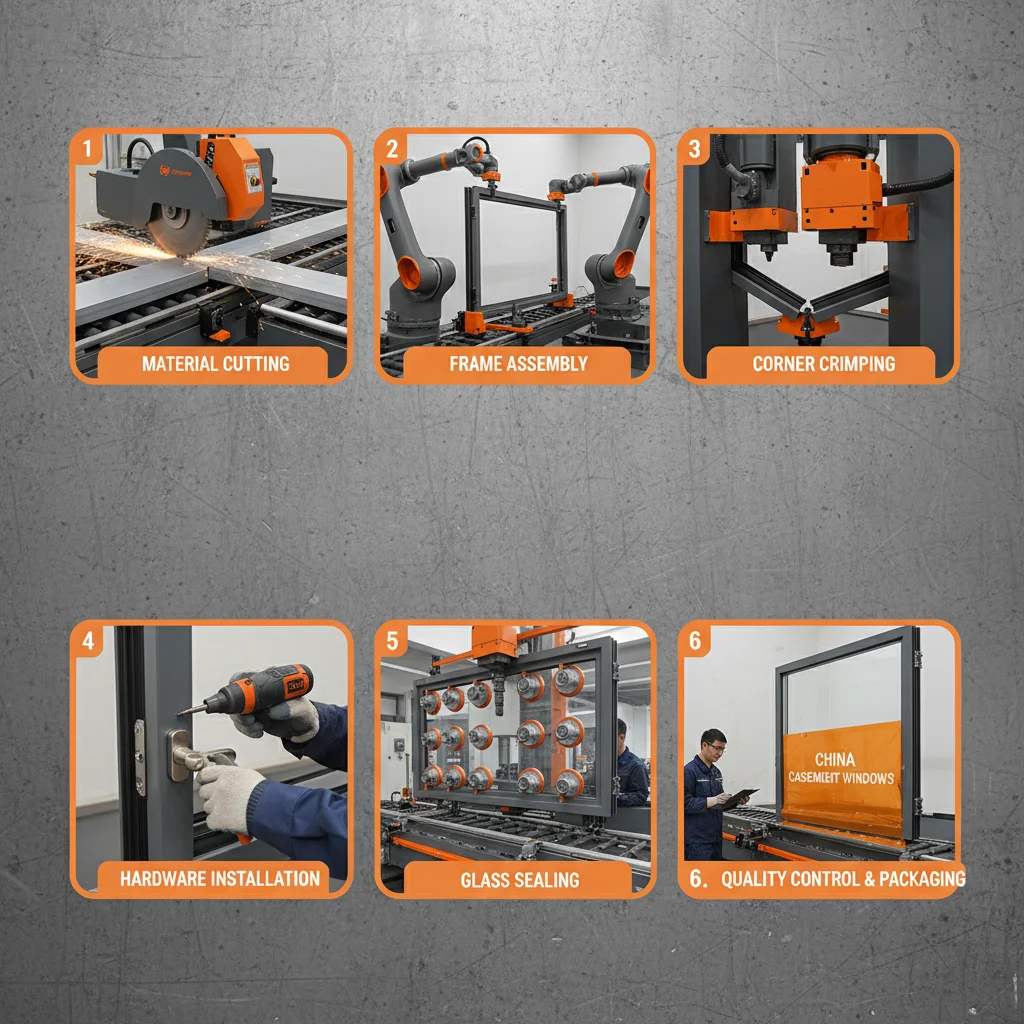
A China Aluminum Sliding Window Factory serves as a specialized manufacturing hub providing high-precision architectural apertures designed for modern residential and commercial buildings. These facilities integrate advanced extrusion technology with rigorous quality control to produce sliding systems that balance aesthetic transparency with structural integrity, catering to global demands for energy-efficient building envelopes.
For procurement managers and construction firms, sourcing from a reliable factory is critical to avoiding common industry pitfalls such as material volatility, inconsistent batch quality, and delayed shipping schedules. The challenge lies in finding a partner that combines large-scale production capacity with the technical agility to meet diverse international certification standards like CE, NFRC, and ISO 9001.
This technical analysis explores the operational standards of premium aluminum window manufacturing, evaluating critical performance metrics, material selection, and the strategic advantages of direct factory sourcing to help stakeholders optimize their supply chain and reduce total cost of ownership.

1Core Manufacturing Standards of Sliding Windows

The production process in a professional China Aluminum Sliding Window Factory begins with high-precision aluminum extrusion, typically using 6063-T5 alloy. This stage ensures that the profiles possess the necessary tensile strength to support large glass panes while maintaining strict dimensional tolerances. Following extrusion, profiles undergo surface treatment—such as powder coating or anodizing—to provide long-term corrosion resistance against UV radiation and humidity.
Assembly focuses on the integration of high-performance hardware and sealing gaskets. The use of EPDM (Ethylene Propylene Diene Monomer) rubber seals is standard for ensuring water-tightness. Every unit is subjected to a series of tests, including wind-load simulation and water penetration tests, to ensure the product meets the specific building codes of the destination market.
Quality management systems, such as ISO 9001, govern the entire workflow, from raw material inspection to final packaging. This systematic approach minimizes the rejection rate during site installation and ensures that bulk orders maintain consistency across thousands of units.
2Technical Advantages of High-Grade Aluminum Profiles
Modern sliding window systems rely heavily on the metallurgy of the frame. Premium factories utilize T6 heat-treated aluminum, which offers a superior strength-to-weight ratio compared to standard alloys. This allows for slimmer sightlines—increasing the natural light entering a room—without compromising the structural ability to withstand extreme wind pressures in high-rise applications.
Beyond strength, the surface treatment plays a vital role in the product's lifecycle. Qualicoat-certified powder coating provides a durable barrier that prevents oxidation. For coastal regions, high-micron anodizing is often employed to resist salt-spray corrosion, ensuring the frames do not pit or peel over decades of exposure.
The integration of multi-chambered profiles further enhances the window's performance. By creating internal voids, manufacturers can optimize the frame's rigidity and provide space for reinforcement steel where necessary, particularly for oversized sliding doors and windows.
3Application Scenarios and Environmental Adaptation
Aluminum sliding windows are versatile solutions adapted for various climates. In tropical regions, the focus is on maximizing ventilation and resisting high humidity. In contrast, for Nordic or North American markets, the priority shifts toward thermal retention. This is achieved through the implementation of thermal break technology, which inserts a polyamide strip between the inner and outer aluminum profiles to stop heat transfer.
Residential complexes often utilize these windows to save space, as sliding panels do not project into the living area like casement windows. In commercial settings, larger sliding spans are used to create seamless transitions between indoor and outdoor spaces, requiring heavy-duty rollers and reinforced tracks to ensure smooth operation under heavy loads.
Adaptation also extends to glazing options. From double-pane Low-E glass for energy savings to laminated safety glass for noise reduction in urban centers, the factory's ability to customize the glass filling is a key factor in the project's overall success.
4Performance Metrics and Quality Benchmarks
Evaluating a China Aluminum Sliding Window Factory requires a deep dive into quantified data. Key Performance Indicators (KPIs) include the U-Value (thermal transmittance), Air Permeability (measured in Pa), and Water Tightness. A lower U-Value indicates better insulation, while higher pressure ratings in air and water tests signify a more secure seal against the elements.
Standardized testing according to EN 12207 and ASTM E283 provides an objective basis for comparison. When bulk buyers evaluate samples, they must look for verified laboratory reports rather than internal factory claims to ensure the products will pass local building inspections upon arrival.
China Aluminum Sliding Window Factory Performance Metrics
The data typically reveals that factories utilizing automated CNC lines and standardized thermal break inserts outperform general workshops in both energy efficiency and structural longevity. This performance gap directly impacts the end-user's energy bills and the building's overall carbon footprint.
5Strategic Procurement and Supply Chain Optimization
Procuring in bulk from a China Aluminum Sliding Window Factory offers significant cost advantages but requires a strategic approach to logistics. The most successful importers utilize "Container Optimization," where frames are shipped in a knock-down or flat-pack configuration to maximize the number of units per 40ft HQ container, drastically reducing the freight cost per unit.
Risk mitigation involves establishing clear quality checkpoints. Implementing a Pre-Shipment Inspection (PSI) by a third-party agency ensures that the production batch matches the approved sample in terms of color (RAL), dimensions, and hardware functionality before the goods leave the factory floor.
Furthermore, long-term partnerships with factories allow for fixed-price contracts, shielding the buyer from the volatility of raw aluminum prices. This financial stability is crucial for large-scale development projects with tight budget margins.
6Innovation Trends in Thermal Break Technology
The industry is moving toward "Passive House" standards, where the window system must have a near-zero thermal bridge. The latest innovation involves the use of expanded polyamide strips and triple-silver Low-E coatings, which reflect heat back into the room during winter and block solar gain during summer.
Another trend is the integration of "Smart Glass" and automated sliding mechanisms. Factories are now incorporating hidden electronic tracks and sensors that allow windows to close automatically when rain is detected, blending traditional aluminum craftsmanship with IoT technology.
Sustainability is also becoming a core metric. Leading factories are increasing the ratio of recycled aluminum in their profiles, reducing the carbon intensity of the manufacturing process without sacrificing the mechanical properties of the T5 temper.
7Comparison: Factory Direct vs. Local Distribution
Choosing between a direct China Aluminum Sliding Window Factory and a local distributor involves a trade-off between cost and convenience. Factory direct sourcing eliminates the middleman margin, allowing for deeper customization and lower unit prices, which is ideal for high-volume projects.
Local distributors provide faster delivery and immediate on-site support, but often at a 30% to 50% price premium. For corporate buyers, the ability to control the QC process at the source often outweighs the convenience of local sourcing.
| Feature | Factory Direct (China) | Local Distributor | Impact on Project |
|---|---|---|---|
| Unit Cost | Low (Wholesale) | High (Retail + Margin) | Project Budget |
| Customization | High (OEM/ODM) | Limited (Stocked Items) | Design Flexibility |
| Lead Time | Long (Production + Sea) | Short (Local Stock) | Project Timeline |
| Quality Control | Direct Supervision | Dependent on Supplier | Installation Fit |
| Minimum Order | High (MOQ Applies) | Low (Single Unit) | Initial Investment |
| Certification | Direct Compliance | Verified by Distributor | Legal Approval |
Ultimately, the decision depends on the project scale. For residential developments exceeding 100 units, the logistical effort of direct factory sourcing is justified by the massive savings in Total Cost of Ownership (TCO) and the ability to specify exact technical requirements.
Frequently Asked Questions
Conclusion
Partnering with a specialized China Aluminum Sliding Window Factory allows developers and procurement teams to achieve a superior balance between architectural design and cost efficiency. By prioritizing technical benchmarks such as U-values and wind-load resistance over simple price points, buyers can ensure the longevity and energy performance of their building projects.
For those evaluating scalable window solutions that meet international standards, reviewing the technical capacities and product ranges at www.xiaoanwindow.com can provide the necessary insights to optimize your next procurement cycle.