Hit enter to search or ESC to close
Procuring high-performance building envelopes often involves a critical trade-off between operational cost and long-term structural integrity. For large-scale commercial and residential projects, the selection of sliding systems is no longer just about aesthetics; it is about thermal efficiency, air permeability, and the reliability of the supply chain.
The global shift toward energy-neutral buildings has placed immense pressure on China Sliding Door Manufacturers to evolve beyond basic aluminum extrusion. Modern requirements now dictate strict adherence to international thermal break standards and precision tolerances that can prevent costly on-site installation failures.
This report examines the technical benchmarks and procurement strategies necessary to navigate the current aluminum sliding door market, focusing on how industrial-grade specifications translate into actual project energy savings.


The transition from simple aluminum frames to complex thermal-break systems marks a significant milestone in architectural engineering. Early sliding doors served primarily as barriers; however, the modern era demands they act as thermal regulators.
Shanghai Xiao An has mirrored this industry evolution, growing from a specialized workshop in 2000 into a sophisticated 26,000 sqm facility. The shift toward OEM/ODM partnerships for over 60 countries reflects a broader trend where customized, high-performance profiles are prioritized over generic, off-the-shelf solutions.
Thermal bridging remains the primary cause of energy loss in aluminum structures. To counteract this, the industry has adopted PA66+GF25 (polyamide 66 reinforced with 25% glass fiber) nylon strips. These materials effectively separate the inner and outer aluminum profiles, significantly reducing the U-Value and preventing interior condensation in extreme climates.
Precision in the "pull-out test" is the gold standard for verifying the bond between the nylon strip and the aluminum. A threshold of ≥100 N/mm ensures that the thermal break will not detach under structural stress or thermal expansion, which is a common failure point in low-cost alternatives.
Beyond the thermal strip, profile thickness—typically maintained at 1.8mm to 2.0mm per EN 12020-2—determines the overall wind load resistance. When these factors are combined with multi-layer insulating glass, the resulting system can achieve air permeability ratings as high as Class 6.
Sourcing from overseas introduces operational risks that often outweigh initial price advantages. Procurement leaders frequently encounter "sample-to-production variance," where the mass-produced units fail to match the approved prototype in terms of anodizing quality or profile thickness.
Hidden costs in bulk imports—such as incorrect HS code classification, poor container utilization, and missing certification documents—can inflate the total cost of ownership by 20-30% if logistics are not managed by the manufacturer.
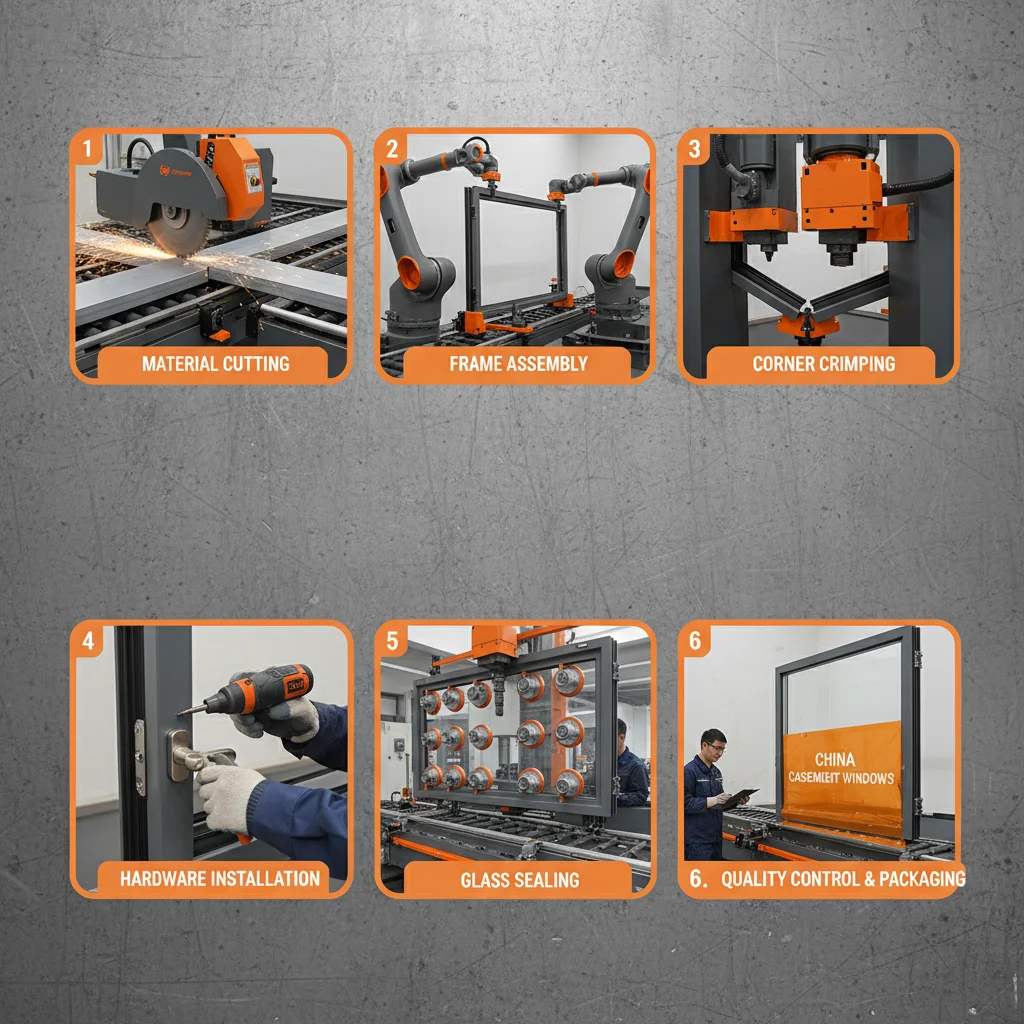
To mitigate these risks, a 7-stage quality control protocol is essential. This includes raw material spectrometry and water tightness tests (up to 1500 Pa) before shipment. Proper documentation, including GS and RoHS compliance, is the only way to ensure that project timelines are not delayed by customs audits.
Different sliding systems are engineered for specific performance targets. For instance, a sliding window designed for a warehouse requires higher air permeability and wind resistance, whereas a residential sliding door prioritizes a lower U-Value for energy conservation.
The following index compares key performance attributes across common industrial profile configurations, illustrating the trade-off between thermal insulation and structural thickness.
In high-density urban environments, such as residential towers in London, the requirement for triple glazing and custom RAL finishes (e.g., RAL 7016) is paramount to meeting strict building regulations like Part L (2025). These projects demand zero non-conformances during the handover phase.
Conversely, industrial hubs in the Middle East, such as Dubai's warehouse complexes, prioritize FCL (Full Container Load) delivery speed and structural durability against sand-laden winds. In these cases, optimizing container loading algorithms can save significant costs per unit while ensuring the glass remains intact during transit.
The next frontier for aluminum sliding systems is the integration of smart glass and vacuum-insulated panels (VIPs). While current triple-glazing options are effective, vacuum technology promises to reduce the thickness of the glass unit while maintaining a U-Value lower than 1.0 W/m²K.
We are also seeing a shift toward "Circular Economy" manufacturing. This involves the use of 100% recycled aluminum alloys that maintain the same structural properties as primary aluminum, reducing the carbon footprint of the manufacturing process without compromising the profile's integrity.
Furthermore, the adoption of BIM (Building Information Modeling) allows manufacturers to provide digital twins of sliding door systems. This ensures that the final product fits perfectly into the architectural shell, eliminating the need for on-site modifications that often compromise the thermal seal.
Choosing the right manufacturer requires a move away from price-per-unit analysis toward a Total Cost of Ownership (TCO) model. This includes evaluating the factory's QC certifications, their ability to handle DDP (Delivered Duty Paid) shipping, and their history of compliance with local energy codes.
Buyers should prioritize manufacturers who can provide a pre-shipment inspection report including spectrometry for aluminum purity and actual pull-out test results for the thermal break strips.
The following table provides a conceptual framework for evaluating different sliding door configurations based on project needs.
| Project Type | Primary Goal | Recommended Spec | Critical Metric |
|---|---|---|---|
| Luxury Residential | Thermal Comfort | Triple Glazing + 34mm PA66 | U-Value < 1.8 |
| Commercial Office | Acoustic Control | Laminated Glass + 2.0mm Profile | Sound Insulation (dB) |
| Industrial Hub | Durability/Cost | Double Glazing + 1.8mm Profile | Wind Load Resistance |
| High-Rise Tower | Wind Pressure | Reinforced Aluminum + Class 6 Air | Water Tightness (Pa) |
| Eco-Friendly Build | Net Zero Energy | Low-E Vacuum Glass + PA66 | Thermal Transmittance |
| Coastal Property | Corrosion Resistance | High-Grade Anodizing + Sealed Joints | Salt Spray Test (hrs) |
For standard profiles, the Minimum Order Quantity (MOQ) is typically 200 units per design. For custom OEM/ODM requests, where bespoke tooling or unique profiles are required, the MOQ generally increases to 500 units after sample approval. Many manufacturers offer FCL consolidation for smaller trial orders to help buyers test quality before committing to full-scale project volumes.
The most reliable method is requesting a pre-shipment inspection report that includes the "pull-out test" result for the PA66 nylon strips (which should be ≥100 N/mm) and a profile dimension scan. Additionally, water tightness tests (e.g., ≥1500 Pa) and air permeability checks (Class 6) should be performed on a sample from the actual production batch, not just the pre-production sample.
Standard lead times for bulk orders between 500 and 1,500 units range from 25 to 35 days following sample approval and deposit. However, factories with dedicated bulk production lines can often compress this to 18 days for urgent projects. It is recommended to secure production slots at least 6-8 weeks in advance, especially during peak construction quarters.
Yes. Professional manufacturers can customize RAL colors, glass configurations (Low-E, tempered, or triple glazing), and profile thickness to meet specific regulations, such as UK Building Regulations Part L or US AAMA/WDMA standards. This is typically achieved by adjusting the thermal break width (e.g., 24mm vs 34mm) and the gas fill in the insulating glass units.
While FOB (Free On Board) is common, DDP (Delivered Duty Paid) is increasingly preferred by procurement managers as it shifts the burden of customs clearance, duties, and local logistics to the manufacturer. For those with their own logistics networks, CIF (Cost, Insurance, and Freight) offers a balance of control and cost. Using a manufacturer with proprietary container loading algorithms can further reduce shipping costs by up to 18%.
Standard aluminum is a highly conductive material, meaning it allows heat to transfer easily, often leading to energy loss and interior condensation. Thermal break aluminum incorporates a non-conductive material (like PA66+GF25 nylon) between the exterior and interior frames. This "break" interrupts the heat flow, dramatically improving the U-Value and reducing the energy load on HVAC systems by up to 12-15%.
Navigating the landscape of China Sliding Door Manufacturers requires a strategic shift from seeking the lowest price to identifying the highest reliability. The true value of a sliding system is found in the precision of its thermal break, the consistency of its mass production, and the transparency of its compliance documentation.
By prioritizing technical benchmarks such as pull-out strength and air permeability over superficial marketing claims, procurement leaders can ensure their projects remain on budget and exceed the energy requirements of the coming decade.