Hit enter to search or ESC to close
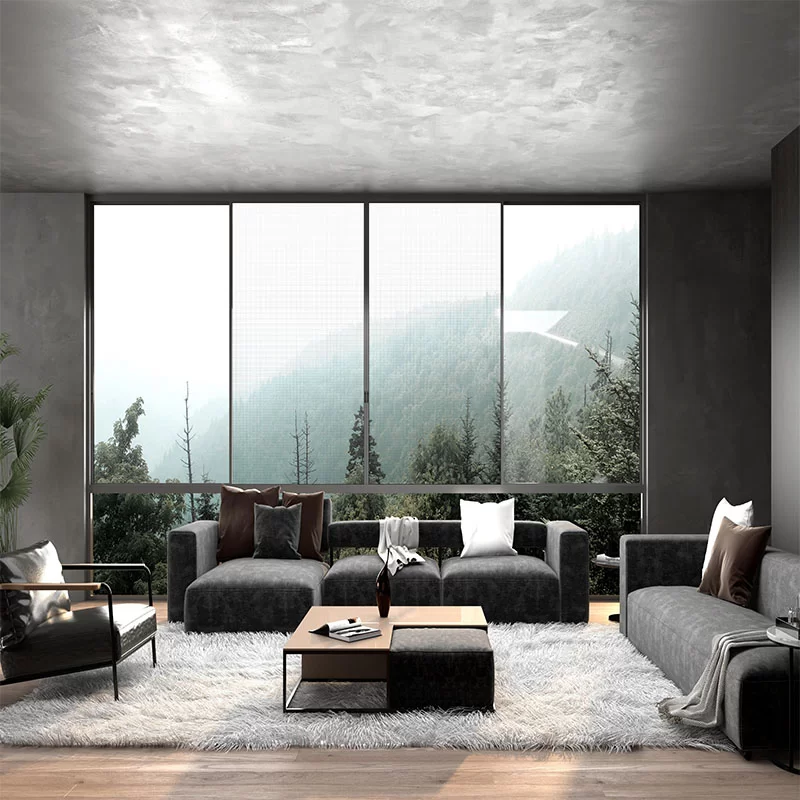


Premium quality
This window model is equipped with high-grade imported hardware and features a minimalist design with the sash enclosed by the frame. Each joint is sealed with waterproof glue and then pressed with a trim line, which not only looks good but also prevents water leakage, making the window more airtight and leak-proof. The integrated ultra-high water-blocking edge serves both sealing and waterproofing functions, and also has a shading effect.


It is unique in the industry that the track is internally connected with felt strips, which effectively seals and prevents dust. The solid support track has a strong load-bearing capacity and eliminates the problem of water flowing inside the profile cavity.
The umbrella-shaped track extension edge structure has strong support and fits well with the window sash felt strips, providing excellent sealing performance. The high and low drainage structure is more reasonable in design and has a large drainage capacity, preventing rainwater from flowing back. The patented key-locked lock can effectively prevent children from opening it by mistake, ensuring safety.


Waterproof adhesive process
Each connection interface is equipped with a waterproof sealant process. After injecting the sealant and pressing the wiring, it is aesthetically pleasing, preventing water leakage issues and making the window more sealed and waterproof.
Double-sealed rubber strips for the frame setting
The sealing strips are integrated into the frame, which effectively protects the strips. Additionally, the double mesh strip connection design ensures excellent sealing performance. Moreover, during the closing process, it also serves as a shock-proof and quieting mechanism.
anti-wind device
The window sashes are equipped with sealing and shading blocks to prevent light leakage and air leakage between the two middle sashes. They also serve as a shock absorber


Aluminum sliding windows are a practical choice for modern residential and commercial spaces where clean architectural lines, convenient operation, and efficient use of space are important. Unlike hinged windows that require clearance for the sash to swing, a sliding window moves horizontally along its track. This makes the opening method particularly useful for balconies, apartments, corridors, and other areas where projecting window sashes may interfere with furniture, walkways, or exterior space.
Another advantage is the visual character of the system. Horizontal sliding configurations can work effectively with wider window openings and contemporary façades, helping architects create a simple, balanced appearance while maintaining practical ventilation.
However, buyers should look beyond appearance when comparing aluminum sliding windows. Track construction, sash support, sealing details, drainage paths, locking hardware, glass configuration, and installation conditions all influence how a window performs in actual use.
The Shanghai Xiao An Series 116 Sliding Window is developed around these practical considerations. Its published structural features include a sash-enclosed frame arrangement, sealing details, track support, drainage design, and locking components. Rather than treating the sliding mechanism as an isolated feature, the system brings together operation, sealing, drainage, and structural details within one window design.
For distributors, contractors, and project buyers, the final configuration should always be evaluated according to opening dimensions, glazing requirements, building conditions, and applicable project specifications.
Choosing between custom sliding windows and casement windows for sale starts with understanding how the building opening will actually be used. Neither opening type is automatically better for every project.
Casement windows use a hinged sash that opens outward or inward, depending on the system. This can provide a relatively large clear ventilation opening, while the closing action can allow the sash to engage perimeter sealing structures. The trade-off is that sufficient clearance is required for the sash to open.
Sliding windows operate differently. The sash moves horizontally along a track and stays within the plane of the window. No additional swing area is required, making sliding systems particularly useful where space efficiency is a priority. This can include balconies, apartments, corridors, rooms beside walkways, and wider architectural openings.
For project buyers, the comparison should go deeper than opening style. Consider the required ventilation area, window dimensions, façade appearance, sealing strategy, drainage, glass configuration, hardware, maintenance access, and installation environment.
Shanghai Xiao An offers both outward-opening casement and aluminum sliding window systems, allowing buyers to evaluate different opening solutions according to project needs.
The Series 116 Sliding Window is particularly relevant where horizontal operation, practical space utilization, and attention to sealing and drainage details are important. Final selection should be based on the complete project specification rather than window style alone.
Drainage is an important consideration when selecting an exterior aluminum sliding window. Because a sliding sash operates along horizontal tracks, rainwater may reach exposed areas of the sill and track. A well-considered window design therefore needs a controlled path for collecting and directing water toward the exterior.
This is why buyers should not evaluate weather management simply by asking whether a window is “waterproof.” A more useful question is: How is water managed inside the window structure?
Depending on the window system, drainage design may involve track levels, drainage channels, sill geometry, water-blocking edges, and exterior discharge paths. These elements work together with seals and installation details rather than functioning independently.
The Shanghai Xiao An Series 116 Sliding Window incorporates structural details focused on this issue. Published product information identifies a high-low drainage arrangement together with an elevated water-blocking edge and sealing-related components. The design approach is intended to help organize the path of water through the window structure and toward drainage points.
For architects, contractors, and importers, these structural details are useful starting points, but they should not replace project-specific performance verification.
When sourcing sliding windows for a particular building, buyers should confirm the required water-penetration standard, window dimensions, installation method, glazing configuration, and relevant test documentation. This is especially important where local building requirements specify measurable water-performance criteria.
Sealing is one of the most frequently discussed topics when buyers compare sliding window systems. The challenge is straightforward: a sliding sash must remain movable, so its sealing strategy is fundamentally different from that of a hinged sash that can close against perimeter seals.
For this reason, the quality of a sliding window should not be judged by a single gasket or weatherstrip. Buyers should examine how the frame, sash, track, interlocking areas, sealing strips, and drainage structure work together.
Potential air or water paths can occur around sash edges, meeting sections, tracks, corners, and other interfaces. A more systematic sealing design therefore aims to manage several of these areas rather than relying on one component.
The Series 116 Sliding Window from Shanghai Xiao An incorporates multiple sealing-focused structural details. Published information for the series includes waterproof adhesive with trim-line pressing, felt strips within the track, double sealing strips, and anti-wind sealing components. Together, these features reflect a system-level approach to the interfaces around the sliding sash.
Actual airtightness, watertightness, acoustic behavior, and thermal performance still depend on the complete window configuration—including dimensions, glazing, fabrication, hardware, seals, and installation.
For project procurement, buyers should therefore request specifications and applicable performance documentation based on their required configuration instead of assuming that every aluminum sliding window delivers the same sealing performance.
Yes—sliding windows can be particularly useful where opening clearance is limited, because the sash moves horizontally instead of projecting inward or outward.
Consider a window positioned near a balcony walkway, furniture, countertop, corridor, or other usable area. A hinged sash may require part of that space to remain clear whenever the window is open. A sliding sash stays within the window plane, helping preserve the surrounding usable area.
This space-saving characteristic is one reason sliding windows are frequently considered for apartments, balconies, contemporary residential buildings, and other layouts where efficient space planning matters.
They can also be considered for wider horizontal openings. The horizontal proportions of a sliding system can complement modern architectural design while providing natural light, outside views, and controllable ventilation.
However, “wide opening” does not mean that any sash size is automatically suitable. As window dimensions increase, buyers need to consider glass weight, sash support, track structure, hardware, frame design, structural requirements, and ease of operation.
The Shanghai Xiao An Series 116 Sliding Window includes a solid support track and a sash-enclosed frame arrangement among its published structural features, making structural support and sliding operation important elements of the system design.
For larger project openings, contractors and architects should provide approximate dimensions, required panel arrangement, glass requirements, and project location so the appropriate configuration can be discussed before specification.
Buying aluminum sliding windows for a construction project requires more than selecting a frame style from a catalogue. For importers, contractors, developers, and window distributors, the complete specification determines whether a system is appropriate for the intended application.
Start with the opening dimensions and configuration. Confirm the approximate width and height, number of panels, which sashes need to move, and the required ventilation opening. Next, define the glazing requirements because glass type and configuration can influence weight, thermal performance, acoustics, safety, and overall system design.
The sliding mechanism should also be reviewed carefully. Buyers should examine the track structure, sash support, sealing interfaces, drainage path, locking arrangement, and maintenance requirements.
For exterior applications, project conditions become especially important. Required air infiltration, water penetration, wind-load, thermal, acoustic, or other performance criteria should be communicated to the supplier rather than assumed.
The Shanghai Xiao An Series 116 Sliding Window combines horizontal sliding operation with structural details focused on track support, sealing, drainage, and locking. Available specifications should be confirmed according to the required project configuration.
Before requesting a quotation, buyers can prepare five essential pieces of information: window dimensions, quantity, opening configuration, glass requirements, and project location. Providing these details helps Shanghai Xiao An discuss the product configuration more efficiently and reduces uncertainty during the sourcing process.


