Hit enter to search or ESC to close
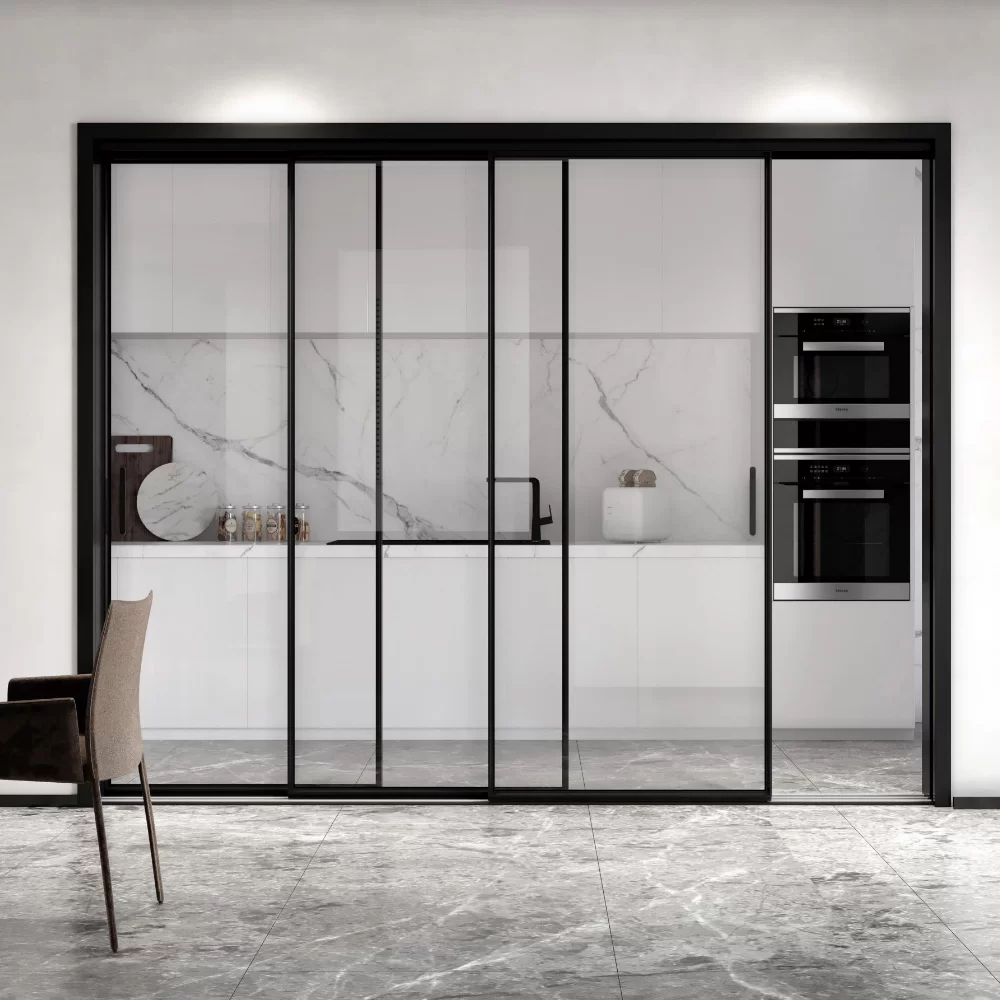


The push-pull design
The push-pull design, with the ability to be opened from either side
The push-pull opening method does not occupy indoor space and does not interfere with the use of curtains, etc. It has excellent sealing performance, featuring a large opening area for the push-pull window and the convenience of opening and closing. At the same time, it also has the sealing performance of the "meticulous opening window", meeting the needs of balcony space.
Personalized customization
Personalized customization, I have the requirements.
1.Configurable to activate the invisible mesh screen.With a wide field of vision, mosquito prevention, self-cleaning, all of these features are included
2.Configurable glass guardrail.Safety is the top priority, and this is the latest top-of-the-line product in terms of appearance.Optional configuration options
Aluminum sliding doors have become a practical architectural solution for modern homes, apartments, villas, hotels, offices, and other commercial spaces where designers want to combine large glazed areas with efficient use of floor space. Unlike hinged doors that require a clear swing area, sliding systems move horizontally along the track. This makes them particularly useful for balconies, patios, living rooms, and areas where furniture placement or circulation space is limited.
Another major advantage is the ability of aluminum frames to support relatively large glass panels while maintaining a clean and contemporary appearance. A larger glass-to-frame ratio can introduce more natural daylight and provide broader views, helping create the indoor-outdoor connection frequently required in modern residential architecture.
However, buyers should evaluate more than appearance when comparing aluminum sliding glass doors. Frame structure, track precision, rollers, sealing components, drainage, glass configuration, locks, and installation conditions all influence actual performance. Shanghai Xiao An’s Series 128 Aluminum Sliding Doors are designed around this complete-system approach, combining structural aluminum framing with a space-efficient sliding configuration.
For developers, contractors, distributors, and homeowners, the objective should therefore be to select an aluminum sliding door that matches the opening dimensions, climate, frequency of use, architectural style, and project-specific performance requirements rather than choosing solely on frame appearance.
Slim frame sliding doors are increasingly specified in contemporary architecture because they help reduce visual obstruction between indoor and outdoor spaces. Instead of allowing thick framing to dominate the opening, a carefully designed aluminum system can increase the proportion of visible glass and create a cleaner architectural appearance.
This is particularly valuable for living rooms facing gardens, villa terraces, apartment balconies, hotel rooms, and other spaces where daylight and exterior views are important design considerations. Large glazed areas can make interiors feel more open while creating a stronger visual relationship between the building and its surroundings.
Aluminum is well suited to this type of application because its structural characteristics allow manufacturers to balance relatively narrow profiles with the requirements of larger glazing systems. But buyers should not judge a slim frame sliding door by sightline alone. Panel dimensions, glass weight, wind exposure, hardware capacity, track structure, and frame stability must also be considered.
Shanghai Xiao An Series 128 Aluminum Sliding Doors provide a modern solution for projects seeking a balance between minimalist aesthetics and practical everyday operation. Different opening dimensions and project configurations can also require different combinations of frame, glazing, hardware, and accessories.
For architects and project buyers, the ideal panoramic sliding door is therefore not simply the system with the least visible aluminum. It is one that achieves a clean sightline while maintaining appropriate structural performance, smooth operation, sealing, and durability for its intended installation environment.
Choosing an aluminum sliding door should begin with the application rather than with appearance alone. Different installation environments create different requirements for opening size, glass configuration, ventilation, weather resistance, privacy, security, and frequency of operation.
For balconies, sliding doors are particularly practical because the panels do not require an inward or outward swing area. This helps preserve usable floor space and reduces interference with curtains, furniture, and circulation routes. In apartments and high-rise residential projects, buyers should also consider local requirements relating to glazing and fall protection.
For patios and terraces, aluminum sliding glass doors can create a broader connection between indoor living areas and gardens, pools, courtyards, or other exterior spaces. Large glazed panels are often selected to increase daylight and maintain outdoor views even when the doors remain closed.
For villas and luxury residences, customization becomes increasingly important. Architects may require larger dimensions, specific frame finishes, glass options, screens, hardware configurations, or other details to coordinate the doors with the overall architectural concept.
Shanghai Xiao An can configure Series 128 Aluminum Sliding Doors according to different residential and commercial project requirements. Rather than applying one specification to every project, dimensions, panel configuration, glazing and accessories should be selected according to the actual opening and operating environment.
This application-based approach helps contractors, developers, and homeowners obtain a sliding door system that fits both architectural intent and practical everyday use.
Energy efficiency is an increasingly important consideration when selecting large aluminum sliding doors because a substantial portion of the opening consists of glass. The performance of the finished system therefore depends on much more than simply choosing an aluminum frame.
Start with the glazing specification. Depending on climate and project requirements, buyers may consider insulated double glazing, Low-E coatings, laminated or tempered configurations, gas-filled cavities, and other glass technologies. Different combinations can influence thermal transfer, solar heat gain, acoustic performance, safety, weight, and cost.
Frame and sealing design also matter. Aluminum conducts heat relatively easily, so projects with demanding thermal requirements should carefully evaluate the complete frame construction and applicable thermal-break solution. Weather seals, interlocking areas, frame joints, and installation quality can also influence air leakage.
The sliding mechanism itself should not be overlooked. Poor track alignment or incorrectly adjusted panels can compromise sealing even when premium frame and glass materials are specified.
For this reason, Shanghai Xiao An recommends evaluating an aluminum sliding door as a complete building-envelope component rather than purchasing according to one specification in isolation.
Before requesting a quotation for Series 128 Aluminum Sliding Doors, project buyers should provide the installation location, opening dimensions, required quantity, preferred glass configuration, climate conditions, and any applicable performance requirements. This allows the door specification to be matched more accurately to the project instead of relying on a generic configuration.
Standard door sizes are suitable for many residential applications, but architectural projects frequently involve openings that cannot be addressed effectively with an off-the-shelf product. This is where custom aluminum sliding doors become particularly valuable for architects, developers, contractors, distributors, and project buyers.
Customization normally begins with overall dimensions and panel configuration. Depending on the architectural opening, a project may require different widths, heights, panel arrangements, or opening directions. Larger openings may also require additional consideration of glass weight, structural loads, hardware capacity, and transportation limitations.
The next consideration is glazing. Glass specifications can be selected according to safety, insulation, sound control, privacy, and aesthetic requirements. Frame finishes can also be coordinated with exterior façades and interior design schemes, while suitable hardware, handles, locks, screens, and other accessories can be incorporated according to project needs.
Shanghai Xiao An provides customized door and window solutions rather than treating every building opening as identical. For Series 128 Aluminum Sliding Doors, project information can be reviewed before production so that dimensions and configurations correspond more closely to actual installation requirements.
For overseas buyers, providing architectural drawings or a detailed door schedule can make quotation and technical communication considerably more efficient. Important information includes opening dimensions, quantity, glass requirements, frame finish, installation location, destination country, and any applicable project standards.
A well-defined custom specification helps reduce ambiguity during procurement and creates a clearer basis for production, installation, and final project acceptance.
Selecting an aluminum sliding door manufacturer for a project involves considerably more than comparing unit prices. For distributors, contractors, developers, and architectural procurement teams, consistency across multiple doors can be just as important as the quality of an individual sample.
Begin by evaluating whether the supplier can support project-specific customization. Architectural openings frequently require different dimensions, glass configurations, finishes, hardware, and accessories. A capable manufacturer should be able to review these requirements before production rather than forcing every project into a limited standard specification.
Manufacturing precision is another important consideration. Sliding doors rely on accurate frame fabrication, track alignment, compatible rollers, hardware installation, sealing, and glazing assembly. Small inconsistencies can affect operation when repeated across a large project.
International buyers should also evaluate packaging and export coordination. Large aluminum frames and glass panels require appropriate protection during transportation, while clear documentation and specification confirmation can reduce misunderstandings between purchasing teams, factories, and installers.
Shanghai Xiao An supplies aluminum door and window solutions for customized residential and commercial applications, including the Series 128 Aluminum Sliding Door system.
When requesting a wholesale or project quotation, buyers should ideally submit dimensions, quantities, drawings, glass specifications, frame colors, required accessories, destination, and project schedule together. This allows suppliers to prepare a more meaningful technical and commercial proposal instead of providing a price based on incomplete information.


